Product Data Sheets
Specifications and overview for every model in the line.
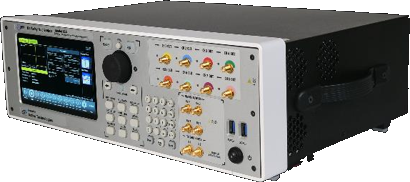
Model 686
2/4 ch · 20 GS/s · 10 GHz · 14-bit. The fastest 14-bit AWG in the line.
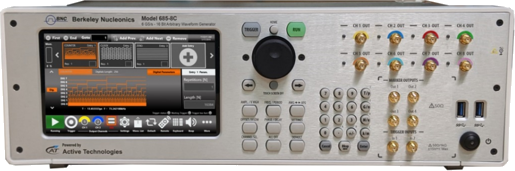
Model 685
2/4/8 ch · 6.16 GS/s · 10 GHz · 16-bit.
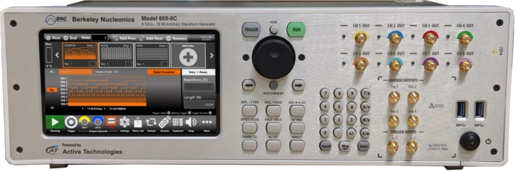
Model 685C
2/4/8 ch · 3 GS/s · 2 GHz · 16-bit.
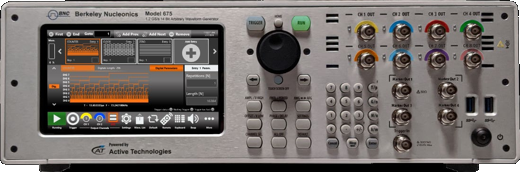
Model 675
2/4/8 ch · 1.2 GS/s · 318 MHz · 16-bit, three-mode Rider.
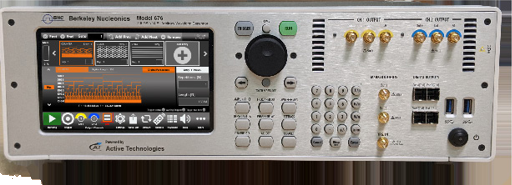
Model 676
Rider series · 16-bit arbitrary waveform and function generator.
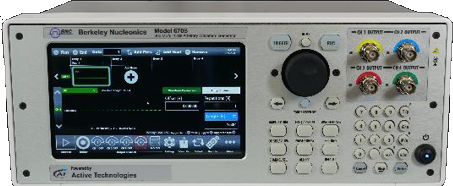
Model 670C
2/4 ch · 600 MS/s · 318 MHz · 16-bit.
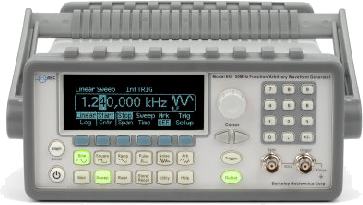
Model 645
1 ch · 125 MS/s · 50 MHz · 14-bit, WaveCrafter.
Model A2255
2 ch · 1.25 GS/s · 250 MHz · 14-bit, compact.
Model A2085
2 ch · 1.25 GS/s · 80 MHz · 14-bit, compact.
User Manuals
Operating manuals. Additional user and programming manuals are on the downloads page.
Model 686 TrueArb User Manual
Full operating manual for the Model 686 in TrueArb mode. Preliminary HTML draft.
Model 675 TrueArb User Manual
Full operating manual for the Model 675. Preliminary HTML draft.
All User & Programming Manuals
Every model user manual and programming manual on the Berkeley Nucleonics downloads page.
Software & SDK
Control software and development kits. These links open the Berkeley Nucleonics downloads.
Model 686 SDK
Software development kit for the Model 686.
Model 685 SDK
Software development kit for the Model 685.
Model 676 Simple Rider SDK
Simple Rider control SDK (670C / 675 / 676).
Model 676 Expert Rider SDK
Expert Rider control SDK.
Model 645 WaveCrafter
WaveCrafter software for the Model 645.
Application Briefs
Where these generators go to work.
Moving from a Tektronix AWG7000 to the Model 685
End the double-pulse workaround: clean, DC-coupled, 16-bit output on the Model 685, with no series resistor or capacitor required.
HEL / ICF Front-End Timing
Timing locked to the facility reference, trigger jitter under 20 ps rms, and stored pre-shaped waveforms at 20 GS/s for high-energy-laser and fusion front ends.
LiDAR Testing
Long, precisely timed multi-channel scenario emulation with deep memory and picosecond resolution.
Pulsed Laser Diode Test
Timing and pulse shaping from a 50 ohm source, gating a DEI current driver that supplies the amperes the diode needs.
Quantum (QKD & Sensing)
Clean, repeatable pulse and waveform generation for quantum key distribution and sensing.
Radar & EW Simulation
Wideband, agile waveform synthesis for radar target and electronic-warfare emulation.
Optics & Photonics
Arbitrary shapes, fast edges, and tight timing for optics and photonics research.
MRI & Medical Imaging
Gradient and RF pulse generation and medical-imaging signal emulation.
Serial Pattern Generation (SPG)
Serial data, PRBS, and stress patterns for high-speed serial and digital test.
Technical Notes
Background reading on arbitrary waveform generation.
BNC-AN-032: Characterizing Digital Logic with Serial Data Pattern Generators
How the Model 675 and 685 serial data pattern generators create multilevel bit patterns to characterize logic gates, ICs, and generic digital systems.
Model 685 Series AWGs for Optics, Photonics & Lasers
Optics, photonics, and laser drive techniques with the Model 685 series.
ArbRider Series Digital Option
The digital output option for the ArbRider series: synchronized LVDS pattern outputs, with the probe and SMA adapter ordered as accessories.
Nuts & Bolts of Arbitrary Waveform Generators
Berkeley Nucleonics reference on arbitrary waveform generation techniques.
Frequently Asked Questions
Common questions on arbitrary waveform generators, sample rate and memory, and modulation.