ScintIQ Custom Scintillation Detectors
Data sheets, readout electronics, application briefs, configurators, and technical notes for the Berkeley Nucleonics ScintIQ™ line of custom scintillation detector assemblies.
Data sheets, readout electronics, application briefs, configurators, and technical notes for the Berkeley Nucleonics ScintIQ™ line of custom scintillation detector assemblies.
Specifications, emission properties, and performance data for each scintillator crystal offered in the ScintIQ™ line.
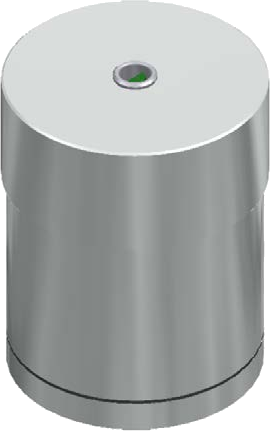
High light yield workhorse crystal; the standard for general gamma spectroscopy and isotope identification.
Rugged, slightly hygroscopic crystal with high light yield and excellent linearity; well-suited to portable systems.
Outstanding energy resolution (2.6% at 662 keV) with fast decay; favored for high-resolution field spectroscopy.
Ultra-fast decay, low intrinsic background, and sub-3% resolution; a strong alternative to LaBr3 where background counts matter.
Elpasolite-family crystal offering high resolution with reduced intrinsic activity compared to pure LaBr3.
Fastest known scintillator (sub-1 ns component); used in coincidence timing and time-of-flight measurements.
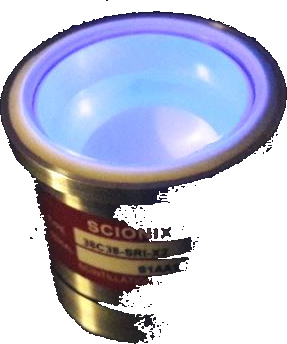
Exceptional energy resolution near 2.4% at 662 keV with very high light yield; emerging standard for premium field systems.
Simultaneous gamma and neutron detection in one crystal via pulse-shape discrimination; no separate He-3 tube required.
Strong neutron-gamma discrimination with good gamma resolution; widely used in dual-particle field instruments.
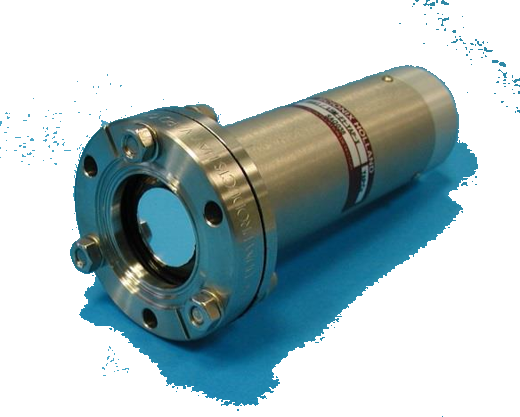
Rugged, non-hygroscopic oxide crystal with fast decay; suited to X-ray detection and high-temperature environments.
Dense oxide scintillator with excellent mechanical strength; non-hygroscopic and stable in demanding conditions.
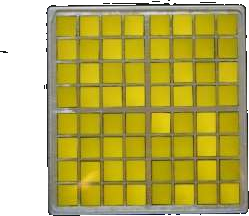
High density, high light yield, non-hygroscopic; one of the brightest oxide crystals, favored for SiPM-coupled assemblies.
High density and very fast decay make LYSO the choice for PET imaging and time-of-flight coincidence systems.
Highest effective-Z of the standard crystals; no intrinsic radioactivity, non-hygroscopic, proven in PET and calorimetry.
Very fast, radiation-hard, high-density crystal with low light yield; the calorimeter material for high-energy physics.
Cerium-activated lithium-6 glass for direct thermal-neutron detection; non-hygroscopic and rugged for field probes.
SiPM readout assemblies, multi-channel analyzers, digitizers, and complete detector systems from Berkeley Nucleonics.
Universal SiPM front-end and bias supply for coupling any ScintIQ crystal to a digital MCA or digitizer.
Turnkey 2-inch x 2-inch NaI(Tl) detector with integrated SiPM array and signal conditioning; drop-in field unit.
Thin-crystal SiPM assembly optimized for low-energy alpha and beta counting with pulse-shape separation.
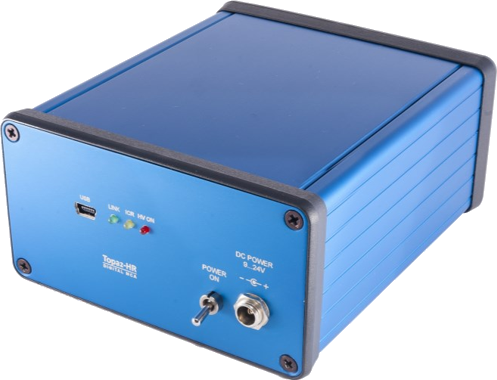
16k-channel multi-channel analyzer with shaping amplifier, stabilization, and USB/Ethernet readout for lab spectroscopy.
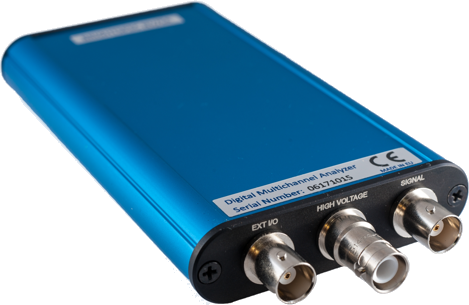
Palm-sized multi-channel analyzer for field deployments; battery-powered with Bluetooth streaming to mobile apps.
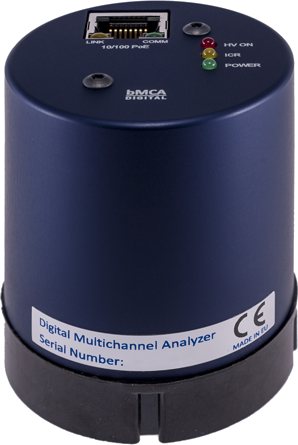
Network-connected MCA for remote and distributed monitoring; 4096 channels, PoE-capable, SNMP-ready.
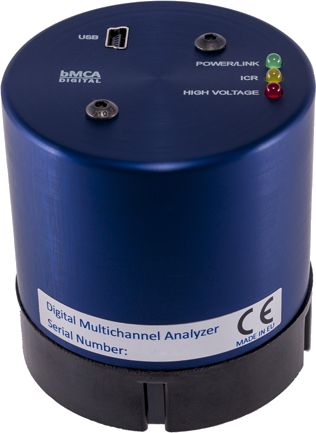
Compact USB MCA with on-board HV supply; plug-and-play with any PMT or SiPM detector.
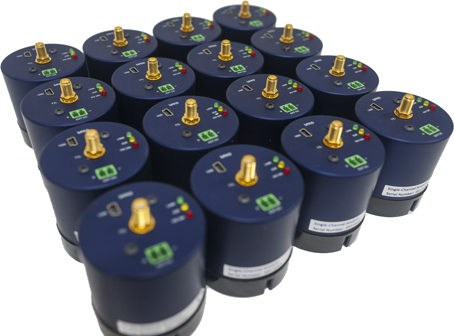
High-speed waveform digitizer for pulse-shape discrimination; supports dual-mode crystals such as CLLBC and CLYC.
Acquisition and analysis software for ScintIQ MCAs: live spectra, energy calibration, ROI tools, and isotope library matching.
Integrated PMT-coupled crystal detector assembly with voltage divider, ready to pair with a ScintIQ MCA or HV supply.
Interactive tools to compare materials, narrow down detector options, and generate a configuration for a quote.
Side-by-side comparison of key properties (light yield, decay time, resolution, hygroscopicity) across all 14 materials.
Guided selection tool: answer questions about your application and the tool narrows the recommended crystal list.
Build a complete detector assembly by choosing crystal, size, housing, window, and readout, then request a quote.
Short application notes covering how ScintIQ detectors are deployed across key markets and use cases.
Handheld and vehicle-mounted ScintIQ assemblies for border screening, RIID, and radiological threat response.
LYSO and BGO assemblies for PET detector rings; NaI(Tl) and CeBr3 for gamma camera heads and SPECT.
Fixed and deployable ScintIQ systems for dose-rate monitoring, contamination surveys, and effluent screening.
Calorimeter crystals (BGO, LYSO, BaF2) and fast-timing assemblies for particle physics detectors and accelerator diagnostics.
Dual-mode CLLBC and CLYC assemblies for simultaneous neutron-gamma detection without He-3 tubes.
High-temperature-rated NaI(Tl), YAP:Ce, and BGO assemblies for downhole gamma logging and industrial gauging.
Background reading on scintillation physics, detector selection, and measurement technique.
A plain-language guide to light yield, decay time, energy resolution, hygroscopicity, and effective-Z, with guidance on matching these to application requirements.
How pulse-shape discrimination separates neutron and gamma events in elpasolite crystals such as CLLBC and CLYC.
Trade-offs in gain, bias voltage, magnetic-field sensitivity, form factor, and cost when choosing between SiPM and PMT coupling.
Sources of peak broadening (intrinsic, statistical, non-proportionality, electronic noise) and how to interpret FWHM specifications.
Berkeley Nucleonics web-based reference covering scintillation physics, crystal properties, readout electronics, and system design from first principles.
Common questions on scintillation materials, specifications, and applications.
Independent publications citing this instrument, indexed by Bioz. Citation counts and Bioz Stars ratings are shown live and update as new papers are indexed.
 Powered by Bioz