The Mission
A sealed radioactive source from a decommissioned gauge or medical device gets scrapped by mistake and enters the recycling stream. If it reaches a furnace, it contaminates the melt, the slag, the baghouse dust, and the facility itself. Cleanup runs into the millions, the furnace goes offline, and workers may be exposed. The mission at a scrap yard or foundry is to catch that source at the gate, never at the melt.
Berkeley Nucleonics builds the detection layers that make gate-to-melt screening practical: fixed monitoring at the entrance, mobile screening across the yard, and handheld identification to run down whatever the monitors find.
The Challenge
Scrap arrives by the truckload and the railcar, in dense, irregular piles of metal. That is close to a worst case for radiation detection. A small sealed source buried in a load of steel is partially self-shielded, and the source could be anywhere in the pile. Screening has to be sensitive enough to catch a weak signal through metal, and it has to happen at the pace of the yard, because stopping every truck for a manual search is not workable.
Once a monitor alarms, the next question is whether the alarm is a real sealed source or harmless NORM. Scrap routinely carries NORM in the form of mineral scale, pipe deposits, and certain alloys. An operation that treats every NORM alarm as a source wastes time and money; one that waves them through risks letting a real source past. Telling them apart requires isotope identification, not just a count rate. Through it all, the priority is protecting the melt and the workers, because the cost of a contaminated heat dwarfs the cost of the detection equipment.
Recommended Berkeley Nucleonics Solutions
Effective scrap screening layers fixed monitoring, mobile coverage, and handheld identification.
Gate monitoring
A fixed monitor at the gate is the first line. It screens every inbound truck and railcar automatically as it enters, so no load is checked by hand and none is missed. Berkeley Nucleonics configures fixed gate and portal monitoring on request: tell us the lane geometry, the vehicle speed and the alarm handling you need. It is the layer that turns gate screening into a routine, automatic step.
Mobile and yard screening
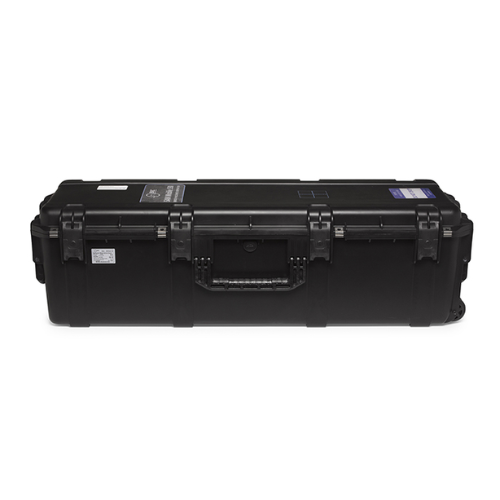
The SAMmobile 150 (RD-150) is a vehicle-mounted radiation detection system that extends screening across the yard and into stockpiles that a fixed gate monitor cannot reach. Its large NaI detectors and GPS mapping let a vehicle survey piles, lanes, and storage areas and log exactly where any elevated reading was found, which speeds the search for a source within a large load.
Secondary identification
When a monitor alarms, a handheld identifier resolves it. The SAM 940+ detects gamma and neutron radiation and identifies across the ANSI, SNM, IND, MED, NORM, and custom categories, so an operator can separate a genuine sealed source from a NORM nuisance alarm and locate it in the load. The SAM 950 offers the same identification categories with a touch-screen interface and NaI(Tl) detectors up to 3 x 3 inch, the larger crystal for a weak source inside a dense load.
Personal protection
Yard and furnace staff working near scrap should carry a personal detector. The Model 951 nukeALERT is a pager-sized gamma alarm that responds within a second to an elevated gamma field, adding a personal safety layer behind the fixed and mobile monitors.
Why It Works
The layered approach works because it catches a source at the earliest possible point and then resolves it efficiently. The fixed gate monitor screens every inbound load automatically, so nothing enters the yard unchecked. The SAMmobile 150 covers the ground a fixed monitor cannot, surveying stockpiles and lanes and locating an elevated reading within a large pile. Together they turn the whole site into a screened space.
Identification is what makes the system economical. Without it, every alarm is a full stop and a manual search. The SAM identifiers separate a real sealed source from NORM scale in seconds, so the yard keeps moving and the operator's attention goes to the alarms that threaten the melt. The cost of one contaminated heat exceeds the cost of the detection program, which is why the personal detectors on staff are the final backstop.
1. Hold the load at the gate and repeat the count. 2. Identify with a handheld from outside the load and record the spectrum, category and confidence. 3. Release a high-confidence NORM result that matches the material declared. 4. Hold any sealed-source isotope (Cs-137, Co-60, Ir-192, Am-241), any SNM or IND category, or any low-confidence result, and call your radiation safety officer or state radiation control program; they adjudicate and direct the search for the source.
Getting Started
Berkeley Nucleonics can help your foundry or recycling operation design a gate-to-melt screening layout, from fixed gate monitors to mobile systems and handheld identifiers. Call 800-234-7858 or email info@berkeleynucleonics.com.
To compare models and detector options, see the Isotope ID & Radiation Detection documentation and selection guide.