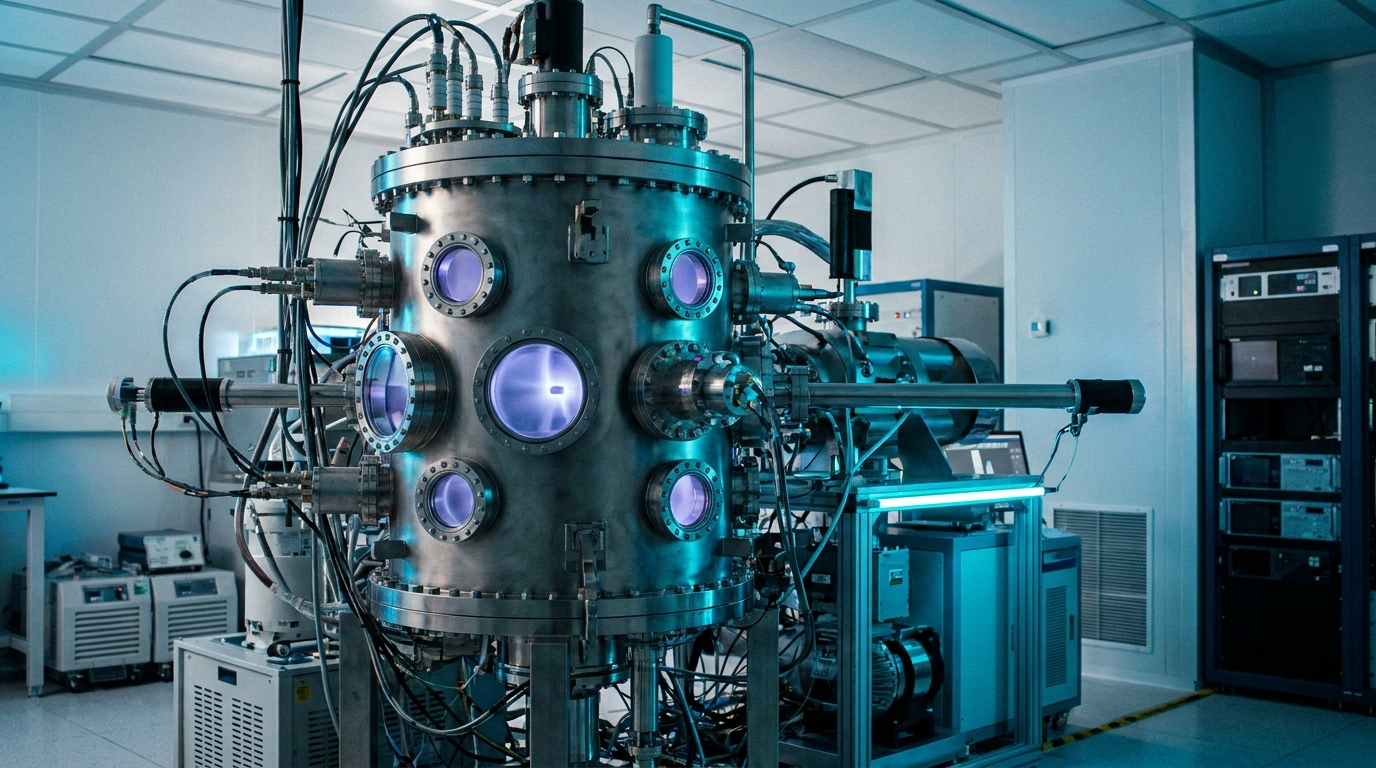
Electron-Beam & Ion-Beam Systems
Electron-beam and ion-beam systems all start from the same idea: take a charged particle, accelerate it through a high-voltage field, and focus it onto a target. The detail varies with the tool. Electron-beam welding, lithography, and evaporation pull electrons off a hot or field-emission cathode and drive them down a column. Ion implantation, focused ion beam, and ion-source work do the same with positive ions to dope a wafer, mill a cross section, or feed a downstream stage. In each case a stack of high-voltage electrodes does the accelerating and focusing, and the supply behind those electrodes sets how the beam behaves. The potentials differ by stage: extraction and focusing electrodes run at a few kilovolts to a few tens of kilovolts, while the main acceleration stage of a welder, a lithography column or an implanter runs from about 50 kV to several hundred kilovolts. The HVX-Series serves the stages at or below 30 kV.
That makes high-voltage quality the quiet variable behind beam quality. Beam current, focus, and placement repeatability track the accelerating and extraction potentials directly. Ripple on the rail modulates the beam energy and smears the focal spot. Slow drift over a shift moves the beam energy or defocuses a written feature, so a tool set up in the morning is out of its window by afternoon. The beam is only as steady as the voltage that forms it, which is why these systems treat the high-voltage supply as a precision instrument rather than a utility.
The electrodes themselves add their own demands. Beam sources and extraction electrodes are often referenced to a potential other than earth, so the supply that biases them has to float on that potential. Switching a column between an electron configuration and an ion configuration calls for reversible polarity. Electrodes need to be brought up cleanly rather than slammed to full potential, and vacuum flashovers between closely spaced electrodes are routine, so the supply has to see the arc, react, and recover without damaging the column or the rest of the rack.
How the HVX-Series solves it
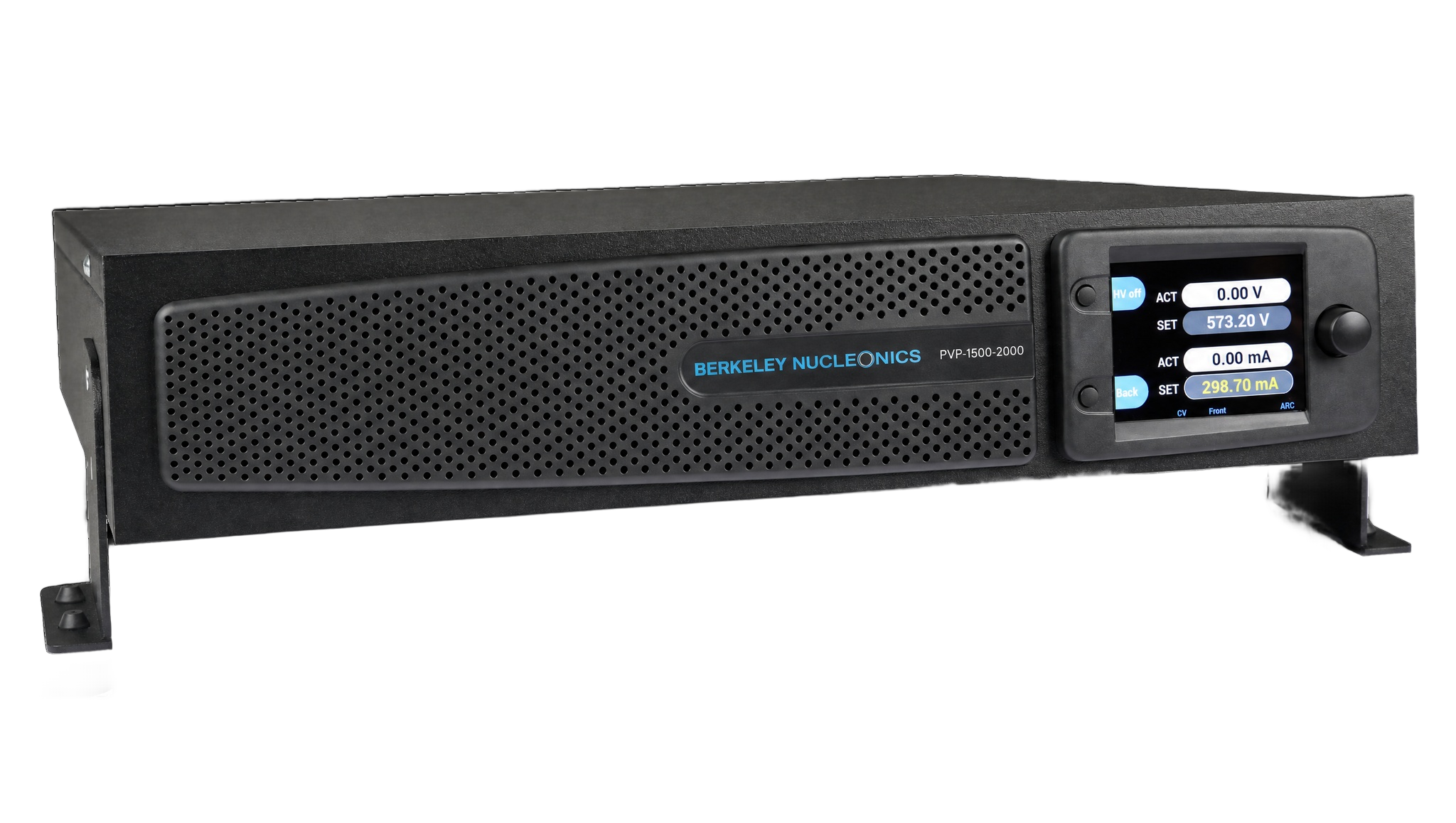
The BNC HVX-Series suits the stages of a column that run at 30 kV or less. Each unit is fully digitally regulated with a microcontroller and FPGA, so the electrode potential is held: line regulation is better than plus or minus 0.01 percent of nominal across a 10 percent mains swing, stability holds within 0.01 percent of nominal over an eight-hour run, and ripple is specified at 0.01 percent of nominal plus 100 mV peak to peak. With 0.01 percent stability over eight hours, a 10 kV stage drifts by no more than 1 V across a shift.
Setting the operating point is as precise. Voltage is set with 16-bit resolution across roughly 0.01 to 100 percent of nominal, fine enough to dial in an extraction or acceleration potential and step it in small increments for a focus or energy sweep. After a 0 to 100 percent change in load current the rail recovers to within 0.1 percent of nominal in under 1 millisecond, so a change in beam current does not pull the electrode potential off its set point.
The output suits the electrodes of a column. The floating versions, the HVX-1500-1400 FLO and HVX-1500-2000 FLO, have no internal earth tie, so their 1.5 kV output can be referenced to an electrode potential set elsewhere in the column; the potential a floating output may ride on is set by the installation's insulation, so state it when specifying the unit. Reversible polarity on the 1.5 kV to 10 kV classes lets one unit serve an electron configuration or an ion configuration. Ramp Control brings electrodes up at a defined gradient, anywhere from 1 V/s to ten times nominal per second, so the column comes up cleanly instead of in an inrush step. Arc Detection watches for vacuum flashover, reports it, and can switch the output off when one starts. That protects the column and the surrounding instrumentation and captures the event in the time-tagged log. Ethernet and RS232 with a standard SCPI command set let the tool controller own the recipe and read back state.
Which HVX-Series models and options fit
The table maps the stages that run at 30 kV or less to the HVX-Series model that fits. Extraction and focus electrodes draw little current, so the choice follows voltage; a source bias that carries the full beam current needs the current rating of the 1.5 kV or 5 kV classes.
| Need | Recommended HVX-Series model | Rating |
|---|---|---|
| Source bias referenced off earth, up to 2 A | HVX-1500-2000 FLO | 1.5 kV, 2000 mA, floating |
| Mid-voltage focusing and source bias | HVX-5000-600 | 5 kV, 600 mA, reversible |
| Extraction and focus electrodes to 10 kV | HVX-10000-200 | 10 kV, 200 mA, reversible |
| Low-energy acceleration stages to 20 kV | HVX-20000-25 | 20 kV, 25 mA, positive or negative |
| Low-energy acceleration stages to 30 kV | HVX-30000-17 | 30 kV, 17 mA, positive or negative |
For beam work the two options that earn their place are Arc Detection and Ramp Control. Arc Detection is the protection against the routine vacuum flashovers between electrodes; it can switch the output off and logs the event with a time tag. Ramp Control brings the electrodes up on a controlled gradient, which is gentler on the column and gives a repeatable startup. Choose the floating variant for a source bias that is referenced off earth, and the reversible variant where one column has to run electron and ion configurations.
Recommended configuration
A column uses several supplies, one per stage, and the HVX-Series covers the stages at 30 kV or less: a HVX-10000-200 on an extraction or focus electrode, a HVX-20000-25 or HVX-30000-17 on a low-energy acceleration stage such as a source test stand, an electron-impact ion source or a low-voltage scanning column, and a HVX-1500-2000 FLO for a source bias that carries the beam current and is referenced off earth. A HVX-5000-600 covers a bias or focus stage to 5 kV that needs more current. The main acceleration stage of a welder, a lithography column or an implanter runs above this range and takes a supply rated for it.
Fit Arc Detection on every stage, since any electrode pair can flash over, and add Ramp Control so the column comes up on a repeatable gradient. Drive each supply over Ethernet with SCPI from the tool controller so the extraction, focus and acceleration potentials move together under one recipe, and rack the 2U units into the tool frame beside the rest of the column electronics.
Talk to an application engineer
Berkeley Nucleonics can help you match HVX-Series models and options to the stages of your electron-beam or ion-beam column. Call 800-234-7858 or email info@berkeleynucleonics.com.
For a quick question, chat with an engineer at berkeleynucleonics.com.
Ask now → Chat with our assistant and get an answer in seconds.