


Berkeley Nucleonics 500 Series Delay Generators
The Berkeley Nucleonics 500 Series Delay Generators deliver industry leading precision in a multitude of user-friendly factors. timing in compact, user-friendly designs. Built for applications that require accurate event control, the series offers reliable, industry-leading performance.
Model 575 Multi-Channel Delay Generator
Key Advantages
- Generates and synchronizes multiple pulses with high stability
- Independent channel control for flexible timing architectures
- Optical and electrical input/output options for broad compatibility
- Cost-effective, high performance solution for advanced timing needs
Engineered for Demanding Applications
Specifications
Internal Rate Generator
External Gate Input (Standard)
External Trigger Input (Standard)
Electrical [TTL / Adjustable] Outputs (Standard)
Adjustable amplitude, 2.0 to 20.0 VDC into Hi-Z; 10 mV resolution
Optical Inputs (Option IL82 or IL130)
Optical Outputs (Option L82 or L130)
Standard Features / Functions
Output Options
- Option L82 or Option L130 - Optical Outputs
- Option TZ50 - TTL 50 Ω Output Impedance
- Option AT35 - 35V Adjustable Output
- Option TZ35 - TTL 50 Ω Output Impedance + 35V Adjustable Output
- Option AT45 - 45V High and Low Impedance
AT45 NOTE:
* Due to the power consumption and heat restrictions, a maximum of four AT45 channels can be installed on a single unit
** Deletes TTL and ADJUSTABLE mode selection and replaced by LOW and HIGH Impedance selection
System Options
Quick Specs
- Outputs: 2, 4 or, 8 Independent Channel Outputs
- Pulse Width: 10 ns – 1000 s
- Pulse Delay: 0 ns – 1000 s
- Pulse and Delay Resolution: 250 ps
- Accuracy: 1 ns +.0001 x setpoint
- Jitter: 120 ps RMS
- Voltage Input: 60 V Peak
- Memory: 12 Storage Slots
Service Features
- Warranty: Full 2 Year Warranty
- Integration Assistance, Full Customer Support (Phone or Web-Based)
Field Programmability
Custom Output Modes
Custom Modules such as the TZ-50 give users an expand list of capabilities with the Model 575. One example is our TZ-50 option, which allows customers a TTL signal into 50 ohms expanded.
Negative Delay
Use the handy negative delay feature to reference one channel with respect to another channel in positive or negative time increments. By allowing a channel to reference another channel as its trigger, you can synchronize the channels with respect to each other.
Note that Negative Delay cannot trigger a channel before your initial trigger. It is intended to complement the channel referencing option.
AT45 High Voltage Options *** NEW!!!
Fast rise-time, high voltage output
- 45V rise-time into 50 Ω, <2 ns
- 45V rise-time into Hi-Z, < 9 ns
***Due to the power consumption and heat restrictions, a maximum of four AT45 channels can be added on a single unit***
Internal Rate Generator
Model Summary
Summary of Electrical Outputs
Selectable TTL or Adjustable Output
TTL: ~ 4V amplitude into Hi-Z, 3ns rise-time
Adjustable: 2 to 20V into a Hi-Z load (or 1 to 10V into a 50 Ω load), slew rate 0.1V/ns
Selectable TTL or Adjustable Output
TTL: ~ 4V amplitude into 50 Ω load, 3ns rise-time
Adjustable: 2 to 20V into a Hi-Z load (or 1 to 10V into a 50 Ω load), slew rate 0.1V/ns
Selectable TTL or Adjustable Output
TTL: ~ 4V amplitude into Hi-Z, 3ns rise-time
Adjustable: 5 to 35V into a 50 Ω load, rise-time is 30 ns.
*Maximum rep rate is reduced to 4 kHz
Selectable TTL or Adjustable Output
TTL: ~ 4V amplitude into 50 Ω, 3ns rise-time
Adjustable: 5 to 35V into a 50 Ω load, rise-time is 30 ns.
*Maximum rep rate is reduced to 4 kHz
*This is a combination of option TZ50 and AT35.
Selectable High or Low Impedance
High: adjustable amplitude up to 45 V into Hi-Z load, rise-time < 9ns
Low: adjustable amplitude up to 45V into 50 Ω load, rise-time < 2ns
*Maximum rep rate is reduced to 100 kHz
**Due to the power consumption and heat restrictions, only a maximum of four AT45 channels can be installed on a single unit.
Summary of Optical Outputs
Feature Summary Optical Inputs and Outputs
Berkeley Nucleonics provides the option of having combinations of optical and electrical inputs and outputs. For example, one may have an eight-channel unit with electrical input and four optical and four electrical outputs. One may also order all-optical inputs and outputs.
Some advantages of optical fiber
- EMI Immunity
- Level translation – Move triggers from one potential to another
- No sparks and no high voltage pulses to overcome noisy environments
- Smaller size and much less weight than copper cables
- Span longer distances without signal degradation
- Can easily fit in existing installations
Wavelengths, connectors, and fiber considerations
- Commercially available transmitters and receivers to facilitate your interface
- One may select either 820 or 1300nm
- ST is the standard connector with 0.2dB typical
- Compatible with 50/125 um, 62.5/125 um, 100/140 um and 200 um HCS fibers.
- Distances up to 1.5 km using these receivers and transmitters
Downloadable resources such as datasheets, firmware, software, drivers and products manuals. Alternatively, you can browse resources directly by visiting our downloads page.
Playlist
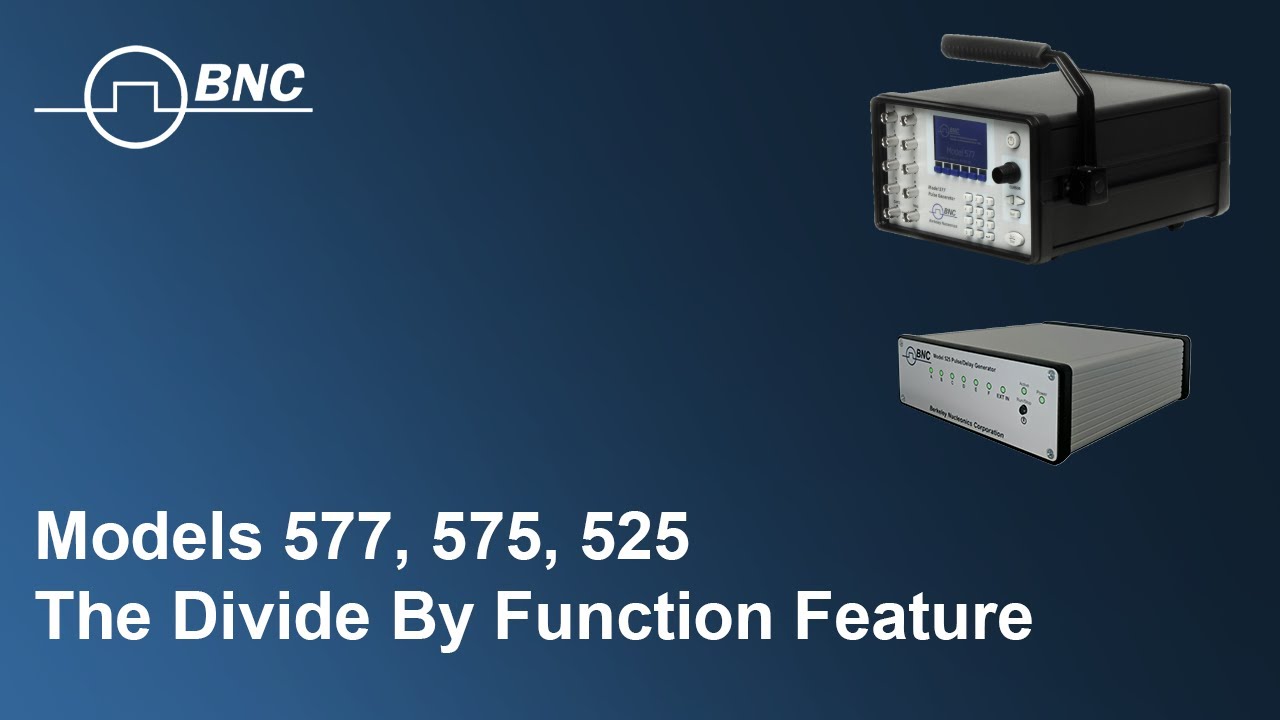
3:43
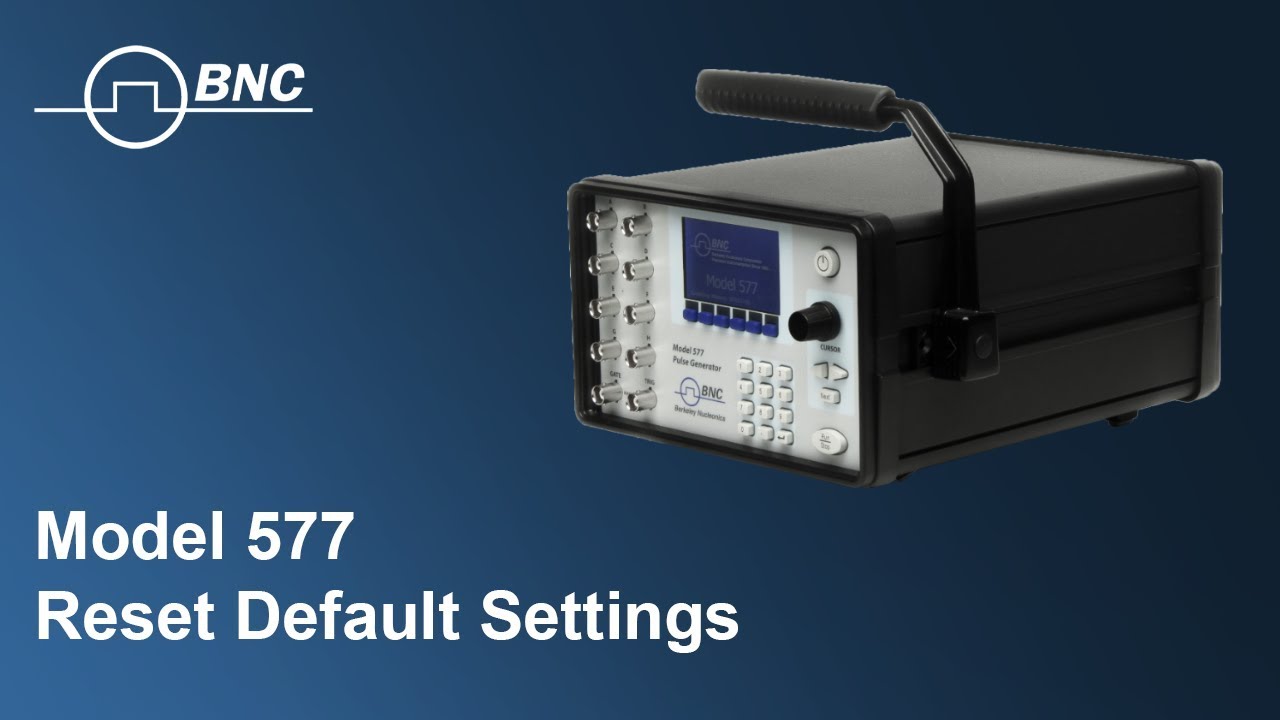
2:03
Price lists are available to our registered users. To view pricing for this and other products, please log in or create a free account.

