

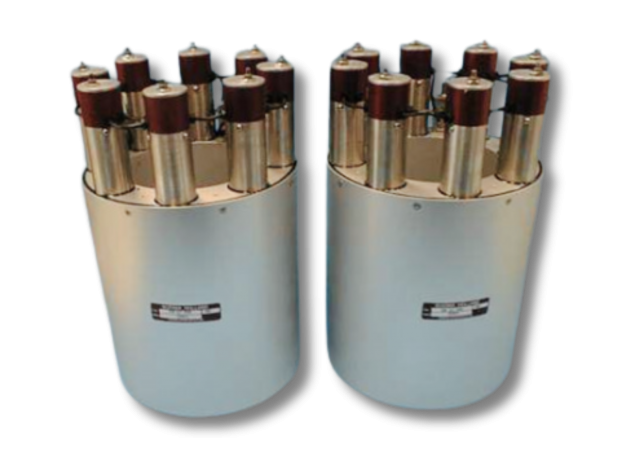
Compton Suppression Shields for High-Resolution Gamma Spectroscopy
Compton suppression shields are scintillation detector assemblies designed to surround a High Purity Germanium (HPGe) detector. They detect gamma rays scattered from the HPGe crystal during Compton events, reducing background continuum and improving peak-to-Compton ratio for clearer spectra.
Key Benefits of Compton Suppression Shields
- Improved Energy Resolution & Peak Clarity: Suppresses Compton-scattered events, enhancing detection of low-intensity gamma lines in complex spectra.
- Reduced Background: Lowers Compton continuum and escape peaks, beneficial for low-level or trace radionuclide identification.
- Customizable Configurations: Various scintillation crystal materials (e.g., NaI(Tl), BGO, LaBr₃), geometries (annular, well-type, segmented), and active/passive shielding options to match specific HPGe setups.
Typical Applications
These high-resolution gamma detectors with Compton suppression are used in:
- Environmental radioactivity analysis and low-level waste characterization
- Nuclear safeguards and non-proliferation measurements
- Whole-body counting and in-vivo bioassay
- Fundamental nuclear physics research and decay scheme studies
- Gamma-ray spectroscopy of complex sources
Multiple design options exist—crystal choice, thickness, and geometry impact suppression efficiency and system performance. Download our application note for detailed guidance on selecting the right Compton suppression shield configuration for your HPGe system.
For help evaluating options, discussing your gamma spectroscopy requirements, or configuring a Compton-suppressed high-resolution gamma detector, contact us or complete our brief detector survey form. We can assist in determining the most suitable assembly for your application.
Overview
General
Compton Suppressors or Anti-Compton Shields (ACS) are used to suppress unwanted background in gamma spectrometry performed with Ge detectors. The detection of low intensity gamma ray lines is complicated in spectrometry performed with High Purity Germanium (HPGe) detectors by the presence of Compton scattered gamma rays of higher energies. At energies above a few hundred keV, the main interaction in the relatively low Z High Purity Germanium (HPGe) crystal is via Compton interaction. The Compton scattered gamma rays thus give rise to a continuous background in the gamma-ray spectrum which consequently raises the detection limit for lines at low energies.
One way to suppress these Compton scattered gamma rays is to surround the HPGe crystal with a scintillation material. When Compton scattered gamma rays escape from the HPGe detector and are absorbed and detected in the Compton Suppression shield, they are in time coincident with the gamma photon detected in the HPGe crystal. When one observes coincident signals in the HPGe detector and the Compton suppression shield, a veto signal can be set to block the registration of the Compton interaction event. This technique is called Compton suppression spectrometry.
Crucial parameters in the design of an Anti-Suppression Shield are a large solid angle coverage around the HPGe detector and a high stopping power. The use of segmented well-type BGO detectors is the generally accepted optimum approach except for systems that require low background. In these cases, the high intrinsic background of BGO makes its use prohibitive and NaI(Tl) is the superior choice. Compton Suppressors are commonly composed of BGO or NaI(Tl) scintillation crystals. NaI(Tl) has 5 times the light output of BGO and can be machined in larger sizes. BGO’s main advantage lies with its high stopping power. The selection of the material to be used with depend on the requirements of the application.
Anti-Compton Shields can also be provided with special “backcatcher” detectors around the cryostat arm for optimum solid angle coverage. A common practice is to use BGO shields equipped with a NaI(Tl) “nose” since at these angles scattered energies are low and a high stopping power is not required.
Common Applications
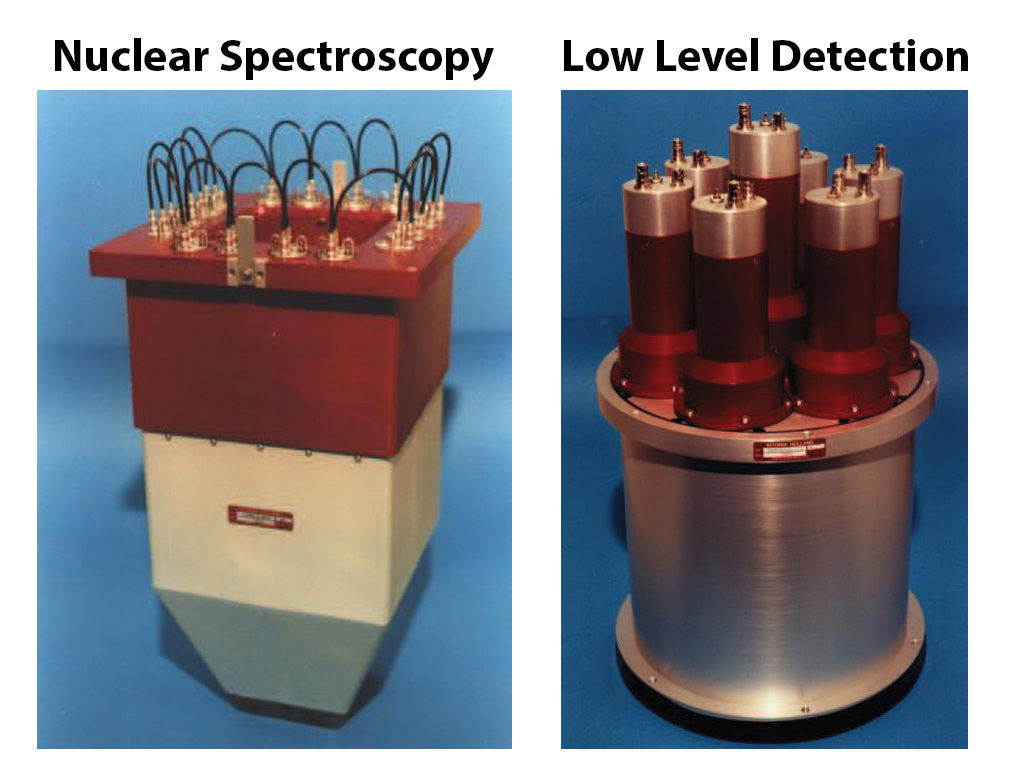
Accessories
Free Online Training Module – An Introduction to Scintillation Crystals and Detectors
Visit our Training page to access the module or for more information
Technical Resources
Scintillators Common Applications
Scintillators Physical Properties
Effects of Polarity on High Voltage Bias of Photomultipliers – Tech Note
Press Room – Scintillation Detectors: Attenuation Length Of Optical Emission
Press Room – Custom-Built Scintillation Detectors For Every Application
Press Room – Scintillator | What Are Scintillator Materials?
Press Room – From Crystal Growth To Assembly: The Manufacturing Process Of Custom Nal Scintillation Crystals
Frequently Asked Questions (FAQ)
Downloadable Resources
Downloadable resources such as datasheets, firmware, software, drivers and products manuals. Alternatively, you can browse resources directly by visiting our downloads page.
Media
Playlist

4:28
47:51
Price Lists
Price lists are available to our registered users. To view pricing for this and other products, please log in or create a free account.
