3. The Detection Ladder
A response program is not built around one instrument. It is built around a ladder. layered sensors, each suited to a particular question. The instruments don't compete; they hand off. The PRD on the officer's belt finds it. The handheld RIID identifies it. The backpack maps it. The vehicle covers ground at speed. Reachback closes the loop with expertise.
This chapter explains where each rung sits, what it can answer, what it cannot, and how the SAM family and RD-150 fit on the ladder.
3.1 Rung 1: Personal Radiation Detectors (PRDs)
A PRD is a small wearable detector, pager-sized or smaller, that detects gamma radiation and alerts the wearer when levels exceed a learned background.
What a PRD does well - Constant, hands-free monitoring - Fast alarm in ambient gamma fields - Lightweight, batteries last weeks - Cheap enough to issue at scale
What a PRD cannot do - Tell you what isotope is present - Reliably distinguish a hot patient from a threat source - Provide a spectrum to send to reachback - Quantify dose rate accurately at a distance from the source
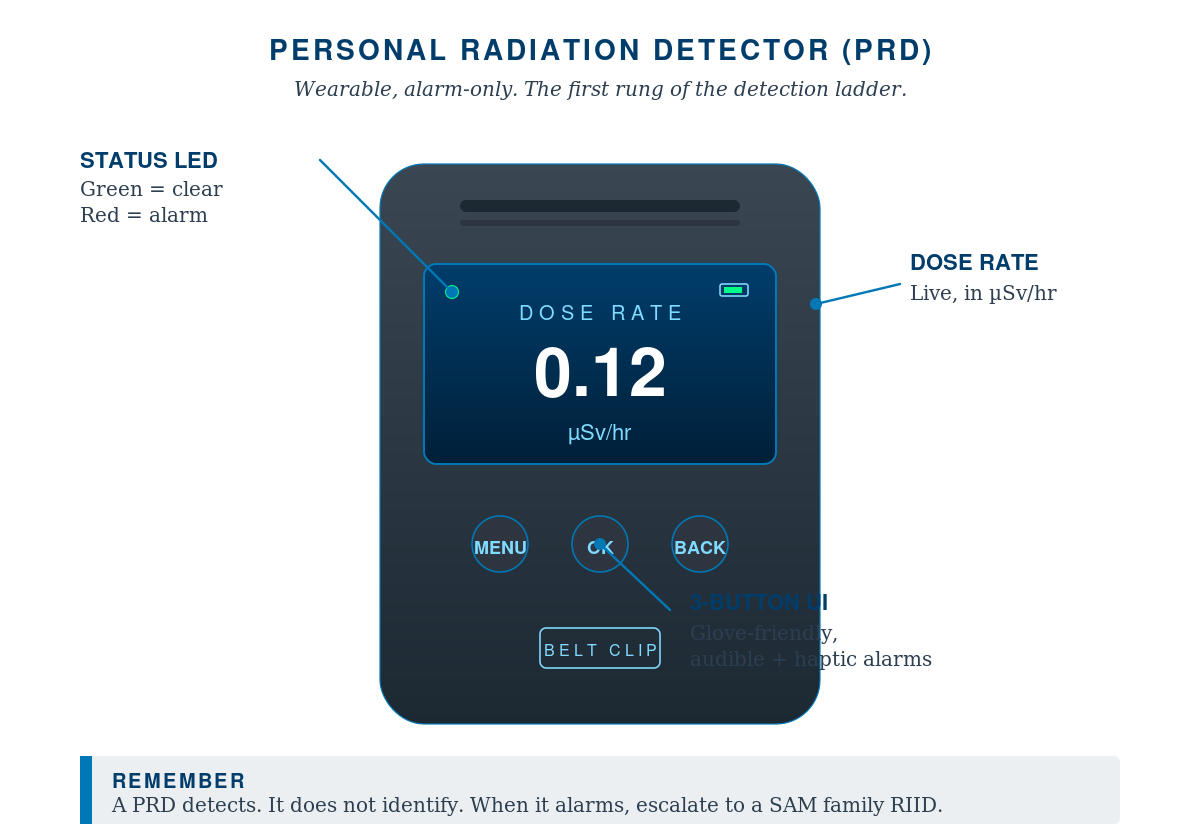
PRDs are an alerting layer. They are always part of a program; they are never the last word. When a PRD alarms, the operator's job is to escalate, not to interpret.
BNC in Practice: Wallet Cards for Medical Patients
Hospitals issuing Tc-99m, F-18, I-131, and Lu-177 increasingly hand the patient a wallet card with the isotope, time of administration, and clinic contact. When you encounter a PRD alarm at a transit checkpoint or building entry, ask the citizen if they have a card. A 30-second card check has resolved many alarms that would otherwise require a full RIID scan and reachback packet.
3.2 Rung 2: Survey Meters
Survey meters (rate meters with a Geiger-Müller tube or scintillator probe) measure dose rate. Some can detect alpha and beta in addition to gamma. They give a quantitative reading, "how much", but, like PRDs, they cannot identify the isotope.
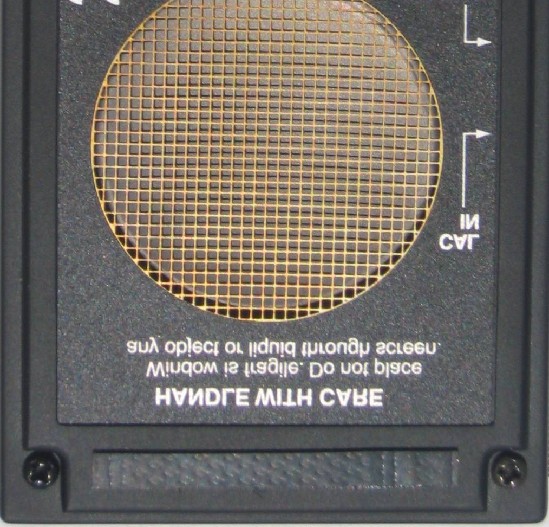
Survey meters are essential for cordon work and dose tracking. They are the right tool for sweeping a known scene and confirming where it is "safe to walk" versus "stop and call." But again, they cannot answer the central question: what is it?
3.3 Rung 3: Handheld RIIDs (the SAM Family)
A handheld radioisotope identifier is purpose-built to answer "what is it?" It combines:
- A larger, higher-resolution scintillator (CeBr or LaBr in the SAM family)
- A multichannel analyzer (MCA) running an isotope library
- A ruggedized handheld form factor with display, controls, GPS, storage, and connectivity
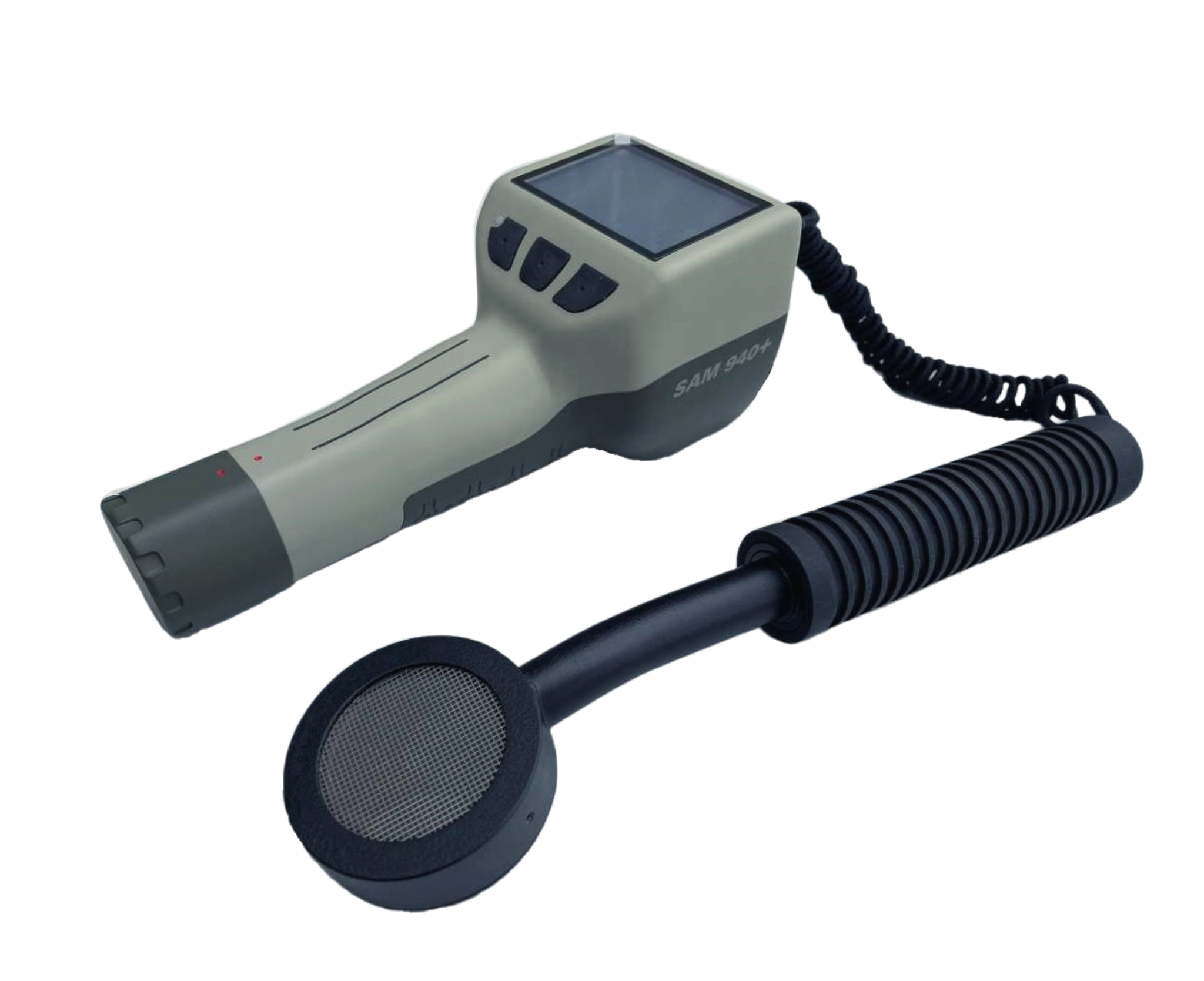
The operator points it, scans, and gets back a name: "Cs-137. High confidence. 350 µSv/hr at the housing." That answer lets command decide whether the cordon stays, expands, or contracts; whether the public must be warned; whether federal partners need to be on a plane.
The SAM family sits here on the ladder, the SAM 940+ (current flagship), the SAM 940 / 945 (established fleets), and the SAM 950 (higher-volume handheld). All three are described in detail in Chapter 4.
What a handheld RIID does well - Identifies gamma-emitting isotopes in 30–120 seconds - Quantifies dose rate - Records spectra for reachback - Stores prior events with GPS and time - Supports integration with command and reachback workflows
What a handheld RIID does less well - Wide-area search (it is not a sweep tool by itself) - High-rate-of-motion search from a vehicle (it can do it, but a backpack/vehicle system is purpose-built) - Definitive identification of difficult, masked, or shielded SNM mixtures (federal HPGe lab analysis is the final word)
3.4 Rung 4: Backpack and Vehicle Search Systems (RD-150)
Some missions are too big for a handheld. A stadium sweep, a port yard, a wide-area orphan-source search, a parade route, a presidential venue, these demand more crystal volume, longer dwell time, GPS-tagged spectra, and an instrument that can be worn or vehicle-mounted while the operator covers ground.
The RD-150 family answers that need:
- RD-120 Backpack: A wearable detector with neutron and gamma channels, a paired tablet or phone interface for the operator, GPS-tagged spectra, and integration with operations centers. The operator walks at a normal pace; the system continuously logs and alarms.
- RD-150 Vehicle: The same detection technology in a vehicle-mountable configuration, sweeping at street speeds, building a heat map of dose rate and identifications along the route.
Backpack/vehicle systems belong on the ladder above handheld RIIDs because they extend coverage area dramatically. They do not replace the handheld, when the backpack identifies a hotspot, an operator typically follows up with a SAM family handheld for confirmation, photo documentation, and reachback hand-off.
3.5 Rung 5: Reachback and Laboratory Spectroscopy
Reachback is not an instrument; it is a channel. When you transmit a spectrum from a SAM family handheld or RD-150 to a duty health physicist, you are accessing a different rung, laboratory expertise, software re-analysis, comparison to internal databases, and judgment from people who have seen thousands of spectra.
Some events also escalate to HPGe lab analysis by federal partners or state health departments. HPGe gives the cleanest spectrum available; it is the right tool for definitive identification of the ambiguous case, but it is slow, lab-bound, and not a frontline option.
Operator rule: Reachback is not a sign of weakness. Reachback is part of how the system is designed. The fastest way to look like a pro is to send a clean spectrum with good notes early.
3.6 How the Ladder Behaves on a Real Call
A typical sequence for a productive scene:
- PRD on a patrol officer's belt alarms during a traffic stop.
- The officer steps back, calls dispatch, and stays observable.
- HazMat arrives with handheld survey meters and a SAM family RIID.
- Survey meter confirms elevated gamma; operator notes dose rate at perimeter.
- SAM RIID is brought to within scanning range, acquires a clean spectrum, returns "Cs-137, high confidence."
- Operator saves the spectrum, photographs the source/cargo, transmits to reachback.
- Reachback confirms identification consistent with a missing industrial gauge from a regional manifest.
- Cordon held; appropriate transport and source-recovery resources dispatched. No public alert needed.
The same scene without the ladder might end with an evacuation order, a media event, and a frightened community, for a misplaced industrial gauge. The instrument doctrine is the difference.
3.7 Where Operators Get Confused
A few common errors that good training prevents:
- Treating a PRD alarm as an answer. It is a question. Don't act on it without escalating.
- Treating a high-confidence ID as a license to break ALARA. The instrument tells you what. Distance and time still apply.
- Skipping background. A RIID that hasn't acquired a clean background will struggle to identify low-rate sources. Always background.
- Holding the handheld too far from a small, weak source. If the count rate is barely above background, you'll never get confidence. Closing distance (within ALARA) and dwelling longer are both valid.
- Believing the screen over the spectrum. Confident operators look at the spectrum shape, not just the displayed name. We'll show you what to look for in Chapter 5.
3.8 Detection Ladder, at a Glance
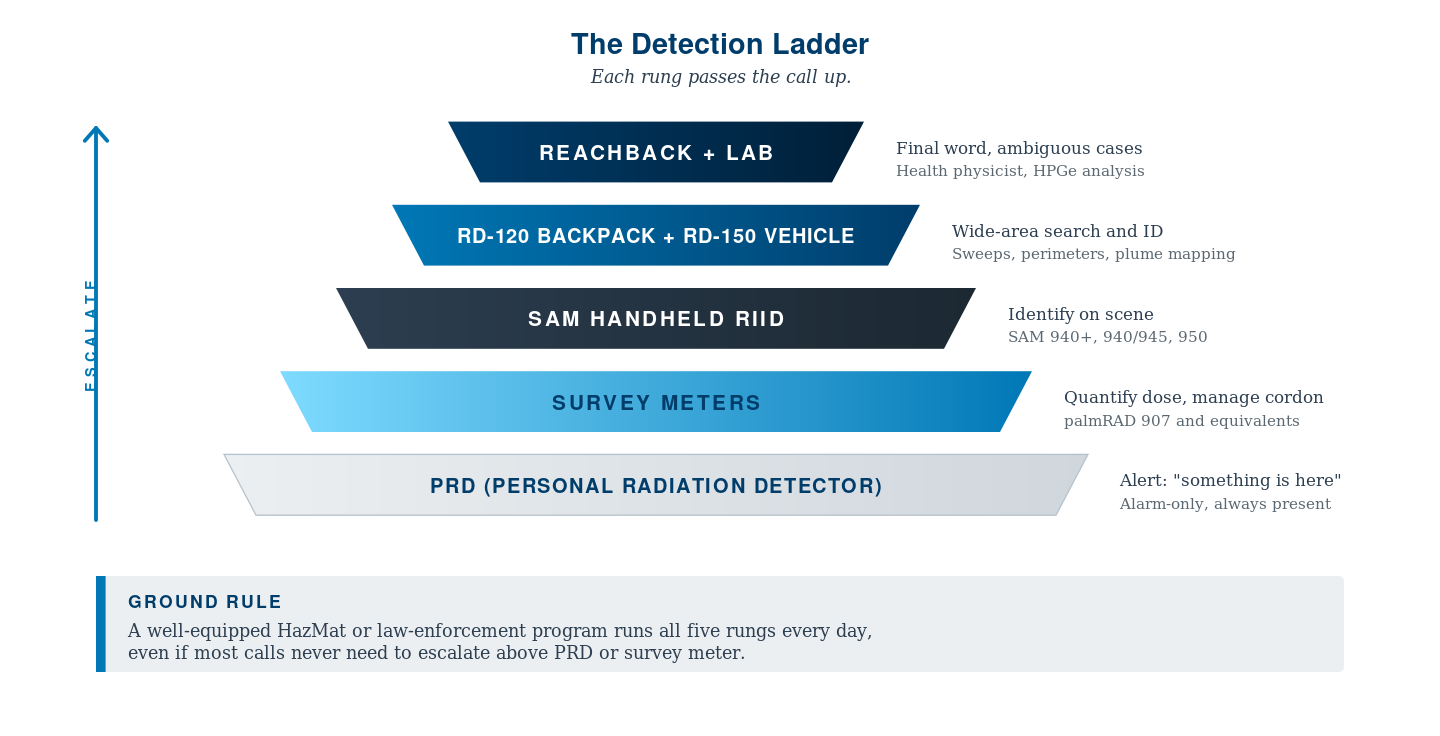
A well-equipped HazMat or law enforcement program runs all five rungs every day, even if most of them never need to escalate.
Chapter 3 Quick Check
- A PRD's primary role is to:
- Identify isotopes
- Detect and alert on gamma radiation
- Quantify dose at a distance
- Transmit spectra
- When a PRD alarms, the operator's correct first action is to:
- Approach the source for confirmation
- Step back and escalate to a higher-rung instrument
- Adjust the PRD threshold
- Begin a manual identification
- Reachback is best characterized as:
- A backup instrument
- A federal-only resource
- A channel for radiological expertise during a live event
- A post-incident reporting tool
- A RIID's neutron channel is most useful for:
- Detecting K-40 NORM
- Identifying medical isotopes
- Distinguishing SNM emitters from gamma-only sources
- Calibrating the gamma channel
- The detection ladder is built on the principle that:
- One instrument fits all missions
- Each rung answers a question and hands off to the next
- PRDs replace RIIDs in trained programs
- Reachback is a sign of operator weakness
Test Yourself
Prefer to answer on screen? Take the interactive quiz → Click an answer for each question, then check your score. Your answers are saved on this device.