

Berkeley Nucleonics, (BNC, San Rafael, CA), provides complete radiation detection and isotope identification OEM package to Building Protection Systems, Inc. (BPSI, San Francisco, CA) for their Building Sentry One toxin protection system to protect New York buildings against a radiological Dirty Bomb attack.
Real time isotope identification by BNC s areaSAM networking detector system allow the Building Sentry One fixed installations to provide immediate detection, identification, and automatic HVAC shutdown to isolate the release protecting innocent building occupants and the assets of subscribing buildings in New York. The technology embedded in the SAM family of isotope identification products, provides real-time ANSI N42 compliant data for regional reachback for DOE & DNDO support. Through partnerships with several US DOE laboratories, BNC has developed a mature isotope library
that BNC claims cannot be equaled by a commercial manufacturer of this type of equipment.
Links:
See Press Release
jyee News Isotope Identifier, Model 1035 areaSAM, Radiation ID, Spectroscopic Area Monitoring

Model 645 ArbitraryWaveform Generator
For Immediate Release,
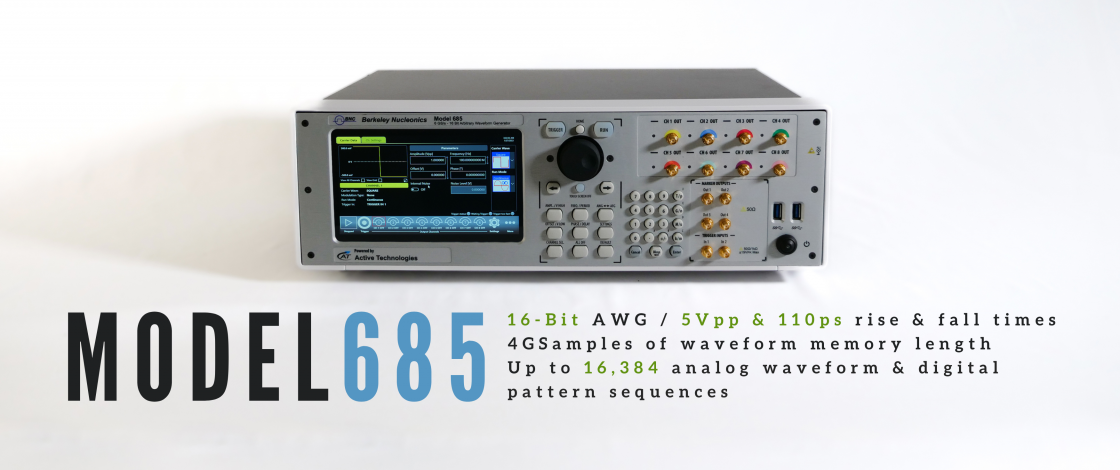
New 50 MHz Function / Arbitrary Waveform Generator addresses increased need for high speed waveforms; expands on current applications, provides avenues for new research, and employs an easy to use interface. Same great price as previous model for domestic customers.
(San Rafael, CA , ) Berkeley Nucleonics, an established northern California instrumentation provider, announces a new model at the same great price. BNC has launched a new family of products for 2009. The first model being released is the highly anticipated 50 MHz Arbitrary Waveform Generator (AWG)..
Links:
See Press Release
Visit Website
jyee New Products Arbitrary Waveform Generator, custom waveforms, Model 645

Model 725 Multi-Trigger Digital Delay Generator
Turbulent and Laminar flow measurementsare extremely important during design and development of many different but common commercial goods. These products range from very complex aeronautical engineering satellite and airplane wings to bluff body objects such as high rise buildings, apartment complexes, passenger cars, and chimneys. PIV experiments can compare fluid flow before, during, and after encountering these objects. While many different techniques can be used for wake studies which include: Laser Doppler Velocimetry (LDV), Flying-Hot-Wire Anemometry (FHWA) and Particle Image Velocimetry (PIV) the main objective is to determine flow characteristics.
Links:
See Application Note
Visit Website
david Application Notes Model 725, Multi-Trigger Digital Delay Generator, Particle Image Velocimetry, PIV
Recent Comments